Welcome to St. Casimir
History of St. Casimir
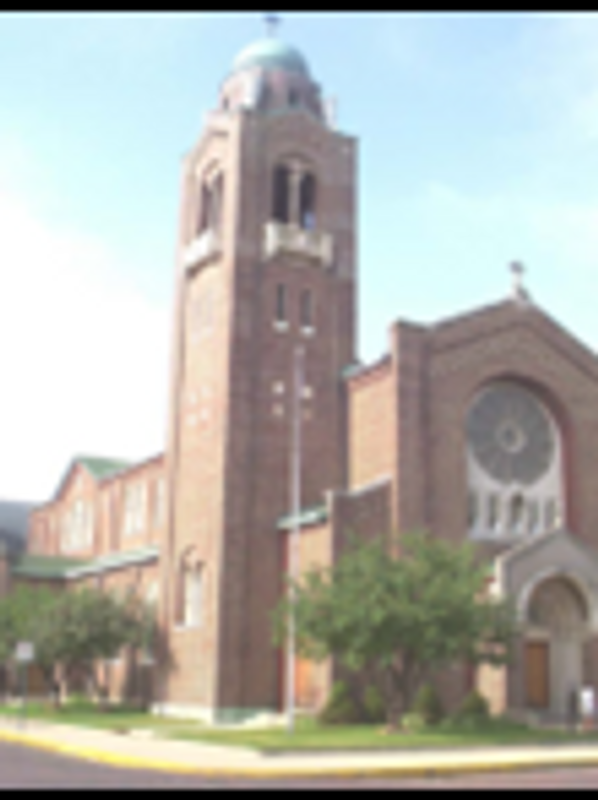
Founded in 1898 by Polish immigrants, the parish known as “Warszawa” became the second of four Polish American parishes in South Bend, Indiana. Rev. Anthony Zubowicz, C.S.C., formerly an assistant at St. Hedwig, was appointed the first pastor. The parish began in a two-story church-school building dedicated in March 1899, with the main hall serving as a church until the present one was built in 1924. Located at Dunham and Webster Streets, it has been staffed by the Congregation of Holy Cross since its founding.
The leading figure in the Polish Catholic community was Rev. Valentine Czyzewski, C.S.C., who for 35 years shaped its religious, social, and cultural life—organizing parishes, founding schools and libraries, mediating labor disputes, and supporting the Polish community’s welfare. On March 13, 1893, he announced at St. Hedwig Church that Polish residents south of the Grand Trunk Railroad should plan a new parish. By 1896, a committee was formed under Frank Gonsiorowski (President) and Joseph Kalamaja (Secretary). On March 2, 1896, Bishop Joseph Rademacher approved the site, remarking, “This is a beautiful location for a parish.” Construction began in April 1898, the cornerstone was laid, and Rev. Zubowicz was appointed pastor on June 11, 1898. Masses were temporarily held at St. Hedwig until the new church was blessed and the first Mass celebrated on March 4, 1899.
The parish grade school opened in 1899, staffed by the Sisters of the Holy Family of Nazareth. By 1910, enrollment reached 600 students in grades 1–8. Classes were taught in Polish and English, and children attended daily Mass and Sunday children’s services. Students walked home for lunch and were quizzed by the priest after Mass.
After Fr. Valentine Czyzewski’s death on June 30, 1913, Fr. Anthony Zubowicz was transferred to St. Hedwig to succeed him. Around this time, discontent at St. Adalbert Parish led to the formation of a Polish National Catholic Church. Rev. W.T. Szalewski, C.S.C., was appointed pastor of St. Casimir but faced fierce opposition, partly because of past tensions with the Polish Falcons and the parish’s desire for Rev. Leon Szybowicz, C.S.C., instead. Continued unrest forced both priests’ removal, and the parish was closed from October 1913 to February 1914.
On February 15, 1914, “Krwawa Niedziela” (“Bloody Sunday”) erupted when parishioners violently resisted the installation of Rev. Stanislaus Gruza, C.S.C. Over 1,000 people clashed with police, resulting in injuries, property damage, and 28 arrests. Bishop Herman Joseph Alerding secured a restraining order against the parish trustees. Although Fr. Gruza eventually took possession of the parish, hostility persisted until his quiet departure in 1915, when Rev. Stanislaus Gorka, C.S.C., became pastor without opposition.
Under Fr. Gorka, the parish recovered, and most members returned. A new church was built in the 1920s at Dunham and Webster Streets—the former site of the 1914 riot—and was blessed by Bishop John F. Noll on November 15, 1925. Most parish men worked at nearby factories such as Studebaker (26,000 employees) and Oliver Farm Equipment (3,000). The Great Depression strained finances, but Fr. Gorka kept the parish afloat by collecting small neighborhood donations.
In 1949, St. Casimir celebrated its golden jubilee and the recent payoff of its church debt. The church was consecrated on May 4, 1949, by Most Rev. Roman R. Atkielski, Auxiliary Bishop of Milwaukee. The school then had 290 students and at least 20 active parish clubs devoted to service, spirituality, youth, athletics, culture, and civic life.
Since the 1960s, St. Casimir’s neighborhood gradually shifted from predominantly Polish to a diverse mix of Mexican, Polish, Black, and other residents. As South Bend’s population declined, the area saw smaller households and more vacant lots. In 1975, despite strong parishioner objections, Rev. Leo Wojciechowski, C.S.C., closed the parish school, which then had 156 students, citing limited prospects for the increasingly Hispanic enrollment.
In 1994, St. Casimir’s pastoral leadership was merged with St. Stephen Parish under Rev. Thomas Lemos, C.S.C. The parish marked its centennial from February 27, 1997, to March 8, 1998, with yearlong celebrations including Eucharistic processions, parade floats, festivals, a school reunion, and the traditional 40-hour devotion near St. Casimir’s feast day on March 4.
In 2003, St. Stephen Parish was suppressed and merged with St. Adalbert Parish. Since then, St. Casimir has shared its pastor and priests with St. Adalbert, whose rectory also serves both parishes. A Spanish-language Mass introduced in 2005 brought renewed vitality and growth. From 2005 to 2018, the former rectory housed the Felician Sisters, and in 2009, the parish offices of St. Casimir and St. Adalbert were consolidated at the St. Adalbert site. Rev. Paul Ybarra, C.S.C., became pastor on July 1, 2016, followed by the current pastor, Rev. Ryan Pietrocarlo, C.S.C., in July 2020.
Our History
History of St. Casimir: As told in 1949 by the parish’s oldest members
In the late 1890s, Polish Catholic families living “over the tracks” in South Bend—known locally as “Warsaw”—sought to establish their own parish. Concerned about sending their children across the railroad to attend St. Hedwig School, they united in their efforts to build a neighborhood church. Though St. Hedwig’s pastor opposed the plan, the people appealed to Bishop Joseph Rademacher of Fort Wayne.
Led by community figures such as Casimir Niedbalski, Joseph Kalamaja, John Duszynski, Mr. Bonek, and Mr. Gonsiorowski, they raised funds through gatherings and events—despite Church restrictions on Sunday festivities and alcohol sales. John Duszynski even provided personal loans. When $18,000 was collected in one Sunday, the land was purchased.
After touring the site in a horse-drawn carriage, Bishop Rademacher declared: “This is a beautiful location for a parish—you have my permission.”
St. Casimir Church opened on December 31, 1898. Contributions included:
- $4 per family for a statue of St. Stephen
- $8 per family toward the rectory, which cost $3,200
- The organ was purchased from Mr. Studebaker
- The first year saw nearly 100 baptisms, including future committeeman Robert Pejza.
Conflict and “Bloody Sunday” (1913–1914)
The early 1900s brought growth but also turmoil. After Rev. Anthony Zubowicz’s tenure, Rev. M.T. Szalewski was appointed pastor—despite strong opposition. Parishioners remembered a 1911 incident when, during a funeral, Szalewski (acting under the Bishop’s order) denied entry to uniformed members of the Kaz Pulaski Falcons and failed to warn the family. This broke trust.
Repeated petitions to the Bishop and Holy Cross leadership to appoint the beloved assistant, Rev. Leon Szybowicz, were rejected. Instead, Rev. Stanislaus Gruza was assigned. The parish committee refused to admit him, insisting on Szybowicz or a secular priest. Tensions escalated when Gruza skipped a parish meeting, and laypeople led Sunday services in the absence of a priest.
On February 14, 1914, known as “Bloody Sunday,” Rev. Gruza arrived with police and sheriff’s deputies to enter the rectory. A violent clash followed—parishioners were shoved, women were injured, and Gruza ultimately withdrew. The incident became a defining moment in the history of Polish Catholics in South Bend.
Legal action followed:
- Several parishioners were jailed.
- Five men were fined $25; the case was later appealed and dismissed in 1915.
- Rev. Gruza eventually took control of the parish with law enforcement support.
- The Bishop filed a $10,000 lawsuit against two parishioners, which was also dismissed.
Though Rev. Gruza remained, most parishioners left St. Casimir’s, choosing to attend other churches.